Retaining Wall Installation in Andover, NH: When You Need Engineering vs. When You Don’t
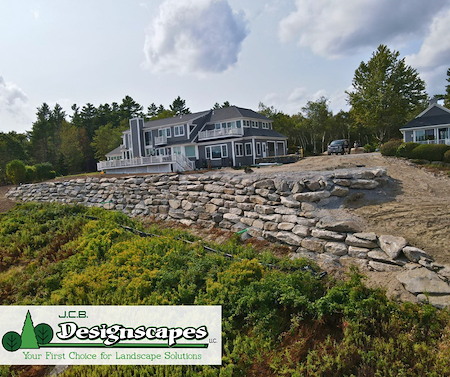
Thinking about a retaining wall in Andover, NH? Our hills, spring thaw, and sudden downpours can put big pressure on any wall. The right design keeps soil where it belongs and protects your yard, driveway, and home. If you want a quick overview or to start planning, see how JCB Designscapes approaches retaining walls and what a safe build includes.
Gravity Walls vs. Engineered Walls: What’s the Real Difference?
Most residential retaining walls fall into two groups. A gravity wall relies on its own weight and proper base to resist soil. An engineered wall uses design calculations and added elements, like geogrid or stronger block systems, to safely hold back heavier loads or taller slopes.
Gravity Walls
Gravity walls are common for shorter, lightly loaded areas such as garden beds or small grade changes. They still need a compacted base, level courses, and good drainage. In our region, frost can lift and tilt a wall that was not set on the right base or lacks drainage.
- Best for small height changes away from vehicles and structures
- Requires free-draining backfill and a solid, level base to resist frost
Engineered Walls
Engineered walls are designed to handle greater loads, taller heights, or challenging soils. They often include geogrid layers that tie the wall into the slope, plus specific block units and drainage details chosen to match the site. An engineer’s plan shows the right grid lengths, step-backs, base depth, and drainage layout for long-term performance.
When an Engineer Is Typically Required in Andover, NH
Every town sets its own rules, and site conditions vary. Here are common triggers that often call for engineering in the Andover area. Treat these as guidelines, not a permit checklist.
- Taller walls or terraced walls that act together as a single system
- Walls supporting driveways, parking pads, or structures near the top
- Steep slopes or hillside properties common near local lakes and ridgelines
- Poorly draining soils, high groundwater, or areas that stay wet after storms
- Walls close to property lines, utilities, or public ways that may need approvals
Poor assumptions about loading are a leading reason walls fail. A pickup parked near the top edge can add far more force than you expect. When in doubt, an engineer’s design is the safest path.
When a Non‑Engineered Wall May Be Appropriate
Short, lightly loaded walls with good soil and plenty of setback from drives or buildings can often be built as gravity systems. The key is a correct base, level course, and proven drainage. If the wall is decorative, not retaining much soil, and far from traffic or structures, a simple design may be a good fit.
Still, small mistakes can lead to big headaches. Frost heave can wreck a wall that looks fine on paper. If your site has standing water, a nearby downspout, or clay-rich soils, ask for a design that accounts for those conditions.
Drainage Behind a Retaining Wall: The Make‑or‑Break Factor
Water adds weight and pressure. A safe wall controls that water and moves it away. At minimum, most successful designs include a free‑draining backfill zone, a perforated collection pipe, and a way to daylight or discharge safely. In freeze‑thaw New Hampshire weather, trapped water turns to ice and expands, which can push a wall out over time.
Here is how pros think about it without getting into DIY steps:
- A clean, open-graded stone zone that relieves pressure instead of holding water
- A properly placed drain pipe with a reliable outlet, not a dead end
- Separation fabric that keeps silts out of the stone zone so it stays free draining
Poor drainage is the number one cause of wall failure. If your site collects water during snowmelt or big summer storms, insist on a drainage plan matched to those conditions.
Early Warning Signs Your Wall Is Failing
Walls rarely fail overnight. Small clues show up first, especially after winter. If you notice any of the following, schedule a professional evaluation before the next wet season.
- Leaning or bulging sections, even by a small amount
- Cracking or separation between blocks or stones
- Soil washouts, sinkholes at the top edge, or gaps opening behind the cap
- Efflorescence streaks or rust marks that suggest long-term moisture
- Heaving, settling, or wavy cap lines after freeze-thaw cycles
If your wall is moving, do not wait until spring runoff to address it. Timely repairs or a rebuild can protect nearby patios, steps, or driveways from further damage.
Site Conditions Around Andover, NH That Change the Design
The Andover area includes rocky glacial soils, ledge, and pockets of dense till. That mix can drain well in one corner of a yard and act like a sponge in another. Properties near Bradley Lake, Highland Lake, or along the Blackwater River corridor may have higher groundwater and steeper slopes. Hillside driveways and long winter shade also extend freeze time, which raises the risk of heave if drainage is not addressed.
Because these factors compound, two similar-looking yards can need very different wall designs. One may work with a compact gravity system. The other may require an engineered wall with geogrid and a more robust base to handle surcharge from a driveway or a parked vehicle.
How JCB Designscapes Approaches Retaining Wall Installation
Our goal is a wall that looks great and stays safe through New Hampshire winters. We start with a careful site walk to understand slopes, water paths, and how you plan to use the area. If the wall will support vehicles or sits on a steep slope, we coordinate with a licensed engineer to produce a stamped design when required.
From there, we match materials and details to the plan. That includes base depth, block system, geogrid placement if needed, and a drainage route with a clean outlet. If your project includes steps, a patio, or planting, we look at the entire space so the elements work together. For a broader look at what our crews install, you can explore our hardscaping services and see how walls tie into walkways and patios.
As your local expert for retaining wall installation in Andover, NH, JCB Designscapes stands behind the workmanship and pays close attention to water management. That is what protects your investment through freeze-thaw and heavy summer rain.
Gravity Wall vs. Engineered Wall: Choosing What Fits Your Property
Here is a simple way to frame the choice. If the wall is short, lightly loaded, and far from traffic, a gravity design may be right. If the wall holds back a driveway, supports a patio, or sits on a steep slope, an engineered design is the safer route. When soils are wet or variable, the engineered path often costs less over time because it avoids repairs.
Homeowners also ask about looks. Many segmental systems offer both gravity and engineered options that match. That means you can keep the same style and color, even if part of the project needs geogrid or a taller section. Good planning makes the transition seamless.
Drainage Behind Retaining Walls: What You Should Expect From a Pro
A quality installer will show you where water goes after it leaves the pipe. If there is no clear outlet, the system is not finished. That might mean daylighting to a safe slope, routing to a dry well sized for local storm patterns, or tying into a larger site plan. In wet pockets of Andover, small changes like adjusting outlet location or adding a cleanout can make a big difference years later.
If your yard plan includes new beds, grading, or lawn areas, it helps to think about water at the property scale. You can skim ideas from our ongoing notes on landscaping and hardscaping tips and then talk with our team about applying them to your site.
What to Do If You See Trouble
If your wall is leaning or stones have shifted, take photos and note where water shows up after rain. That record helps diagnose the real cause, not just the symptom. A professional can determine if a targeted repair will work or if it is smarter to rebuild with a stronger base and better drainage.
Some walls are worth saving. Others are safer to replace. The right call depends on the soil, loading, and how the wall was built. We evaluate each factor so you can make a confident decision.
Next Steps: Build It Once and Build It Right
Ready to discuss your site in Andover, NH or nearby towns? Start with a quick conversation so we can understand your goals and timeline. If engineering is needed, we will coordinate it. If a gravity wall suits the space, we will explain why and show options that fit your style.
Explore design ideas and materials on our page about retaining walls, then call JCB Designscapes at 603-763-4949 to schedule a site visit. We will deliver a clear plan that manages water, handles frost, and looks right with the rest of your yard.