Paver Installation Mistakes That Cause Sinking, Shifting, and Weeds
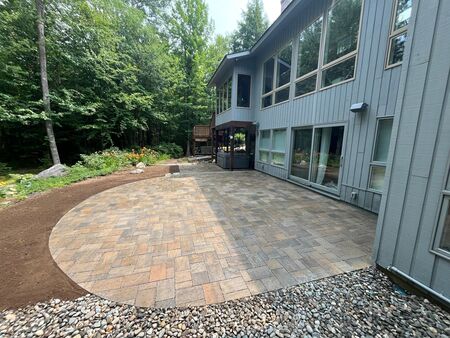
Worried about paver installation that sinks, shifts, or grows weeds a year later? In Lebanon, the key to lasting results is how the base, drainage, and joints are built from the start. If you're planning a patio, walkway, or driveway, see how a professional paver installation prevents the most common failures in our freeze-thaw climate.
Why Paver Installation Fails in Lebanon, NH
New Hampshire winters put hardscapes to the test. Snow, plow traffic, and spring thaws stress every layer under your pavers. The most common reason projects fail is a weak or wet base that can't resist movement when the ground expands and contracts. That movement shows up as dips, wavy edges, loose joints, and sprouting weeds.
Why Pavers Sink: The Hidden Base Problem
When pavers sink, it's rarely a surface issue. The base underneath either settled unevenly or became saturated. Fine soils or fill that was never compacted will compress under normal foot or vehicle loads, leaving tire ruts in driveways or birdbaths on patios.
- Base layers were too thin for the use, especially under driveways or at walkway edges.
- Materials held water because they were mixed with fines that act like mud when wet.
- Compaction was rushed, skipping lifts and uniform passes across the whole area.
- Drainage had nowhere to go, so meltwater pooled and softened the subgrade.
In our region, a stable base starts with clean, angular stone compacted in thin layers. The goal is a dense foundation that resists movement even when the surrounding ground cycles through freeze and thaw.
What Triggers Paver Joint Failure
“Paver joint failure” shows up as loose sand, widening gaps, and weeds. Water that sits on the surface or runs off a roofline can wash joint sand away. Using the wrong sand lets it pump out under foot traffic. And when polymeric sand is installed on a dirty or wet surface, it never cures fully.
Choose polymeric joint sand designed for freeze-thaw. The right product locks the surface, sheds water, and resists de-icing salts better than basic sand. Clean surfaces and dry weather during installation are just as important as the bag you buy.
Shifting Pavers: How Small Gaps Become Big Problems
Pavers creep when the edges are not anchored. Without proper edge restraints secured into the base, normal use pushes the field outward. Curves, steps, and transitions are the first places to show gaps or cracking lines.
Edge restraints are not optional. They keep the pattern tight, protect curves, and stop the first tiny movement that grows into a visible seam. On slopes like Seminary Hill or along driveway aprons, sturdy edging is critical.
Drainage And Base Prep: The Root Of Most Failures
Water will find the weak spot. When patios sit against a house without a slight pitch, water pools and softens sand and base layers. Downspouts that dump near the edge of a walkway saturate the subgrade, then winter expands that moisture and lifts pavers out of place.
Pros plan for runoff and snowmelt before a single paver is set. That means choosing the right base stone, compacting in lifts, pitching surfaces for drainage, and routing roof water away. To see how this foundation-first mindset shapes every project, explore our broader hardscaping approach.
Local Factors Around Lebanon, NH To Plan For
Homes near Mascoma Lake, the Connecticut River, or low-lying yards in West Lebanon often have wetter soils. Shaded sites hold snow longer, and repeated de-icer use can stress joints and edges. Driveways on grades need more robust base depth and edge restraint to stand up to plows and turning tires.
- Snowplows and shovels can catch weak borders and pry them outward.
- De-icing products can degrade poor-quality joint sand faster.
- Spring thaw and “mud season” saturate soils and expose weak compaction.
These are planning details your crew should address in the design and prep stage so the finished surface stays level and tight through every season.
Repairing Shifting Pavers The Professional Way
There is a difference between a quick cosmetic touch-up and a durable repair. A lasting fix begins with diagnosing why the surface moved. Was it poor drainage, weak subgrade, or missing edge restraint? Once the cause is known, the repair targets that weakness so the problem doesn't return.
On a walkway with settled sections, a pro lifts the affected area, corrects base failures, stabilizes the subgrade, re-compacts in lifts, and reinstalls pavers with secure edge restraint. For driveways, the process often reinforces base support where turning or parking loads are highest. When joints fail, surfaces are cleaned, old sand is removed, and polymeric sand is properly installed and activated for a complete lock-up.
Weeds Between Pavers: Symptom, Not The Cause
Weeds don't start in the sand bag. They sprout when airborne seeds land and find moisture and light in open joints. If joints wash out or the surface holds water, plants take root fast. Proper joint sand and tight patterns starve seeds of what they need to grow.
Sealers can help with stain resistance and cleanup, but don't seal over a failing base. Sealing won't stop sinking or shifting, and it can trap moisture where you least want it. Strong structure first, then sealing if it fits the surface and use.
Signs Your Paver System Needs Attention
Watch for early signals and act before small issues become big repairs. In Lebanon’s climate, catching movement in the first season can prevent a full reset later.
- Edges drifting outward or borders leaning
- Standing water after storms or snowmelt
- Joints that keep washing out or growing weeds
- Low spots that worsen after each winter
If you notice more than one of these, a professional assessment can save time and protect adjacent features like steps, doors, and planting beds.
Build It Once, Enjoy It For Years
Quality paver work looks simple when it's finished. The real craft is buried beneath the surface. The crew’s choices about soils, gravel, compaction, pitch, edge restraint, and joint sand decide whether your patio still looks great five winters from now.
Maintenance That Protects Your Investment
Great installs still benefit from simple care. Keep joints intact, keep water moving, and protect the edges. A short checklist extends the life of the system and keeps it looking sharp.
- Clear leaves and debris so water drains off the surface.
- Brush-in polymeric sand where light wear opens shallow joints.
- Redirect downspouts that empty near patios and walks.
- Use plow shoes or rubber blades to avoid prying at edges.
These habits reduce moisture and movement, which are the main drivers of sinking, shifting, and weed growth.
Talk With JCB Designscapes About Your Project
If you want pavers that hold their line through winter, start with a builder who designs for New Hampshire soils and seasons. Our team explains every layer and how it combats the issues above, so you know what you're getting and why it lasts. Call 603-763-4949 or schedule a consultation to discuss the right approach for your site and goals in Lebanon, NH.
Ready for a stable, low-maintenance surface that looks great year after year? Explore the details and request your plan on our paver installation page.