Drainage Solutions for Sloped Yards in New Hampshire: What Actually Works
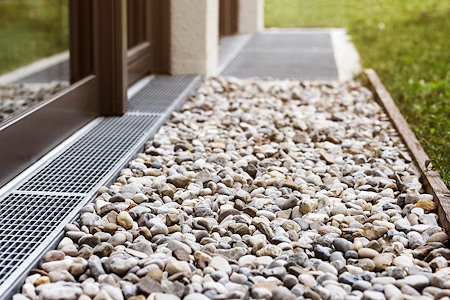
New Hampshire hills are beautiful until gravity pulls stormwater straight toward your house or across your lawn. If you live on a slope in or near Sunapee, you know the cycle: heavy rain, snowmelt, ruts, mud, then frost heaves. This guide explains what actually works for yard drainage on slopes here in the Granite State and when to bring in JCB Designscapes for professional help. If you’re already seeing water where it shouldn’t be, explore our drainage solutions to protect your home and landscape.
Why Slopes In New Hampshire Behave The Way They Do
Our terrain is a mix of glacial till, sandy pockets, and ledge close to the surface. Add intense spring snowmelt and downpours from summer storms, and water moves fast. On a hillside, that flow concentrates into narrow paths that erode topsoil, undercut walkways, and push water toward foundations. Freeze-thaw cycles then exaggerate small problems into bigger ones by loosening soil and shifting hardscape.
Clear Signs Your Slope Needs Better Drainage
- Channels, rills, or exposed roots forming after storms
- Mulch washing downslope or pooling against steps and walks
- Soft, spongy turf that stays wet days after rain
- Basement dampness after snowmelt or heavy summer rain
- Paver settling, heaving, or joints opening along the downslope edge
French Drain Vs. Dry Well: What’s Best On A Hill
French Drains Intercept And Redirect Flow
A properly built French drain is a gravel trench with a perforated pipe, wrapped to keep fines out. On a slope, it works like a subsurface gutter that intercepts water moving through the soil and sends it to a safe discharge. It’s effective along the base of a bank, behind retaining walls, or perpendicular to flow across a hillside. French drains shine when you have steady subsurface seepage or repeated wet spots along a slope.
Dry Wells Store, Then Soak
A dry well is a buried, rock-filled chamber or crate system that temporarily holds roof or surface water and lets it soak into surrounding soil. On steep sites, they help when you can’t daylight a pipe to a lower outlet, and soil percolation is decent. They are less ideal if your yard has shallow ledge or tight soils that infiltrate slowly, since water can back up. In many Sunapee-area yards, a hybrid works best: catch the water with a French drain and empty it into a dry well located where infiltration is proven.
Downspout Drainage On Slopes: Small Detail, Big Results
One of the fastest wins is handling roof water correctly. Concentrated roof runoff racing down a hillside carves paths and overwhelms plant beds. We routinely extend downspouts underground to a solid pipe that exits to a pop‑up emitter or to a dry well downslope. Where a driveway or walk sits below a long roof edge, a trench drain tied into a controlled outlet protects the surface and stops icing risk. Pair this with clean gutters before leaf season and you reduce the peak flows that cause most damage.
Grading, Swales, And The Power Of Slowing Water
Great drainage design on a hill doesn’t just “get rid of water.” It slows, spreads, and guides flow to safe places. Gentle swales cut along the contour collect sheet flow and carry it to a stabilized outlet. Minor regrading above a problem area can take pressure off your entry or patio. When access allows, our crew uses compact equipment to shape clean, stable grades without chewing up lawn. If your project calls for it, we coordinate light site work with our retaining walls so water moves through stone backfill instead of over your patio.
Permeable Surfaces On Slopes: Where They Do And Don’t Work
Permeable pavers can be a strong tool on moderate slopes when installed with the right base and edge restraint. The joint openings and base store stormwater and meter it into the soil. On very steep grades or over shallow ledge, they may not be the best choice because stored water has nowhere to go. In those cases, we’ll often combine a conventional paved surface with edge drains that protect the downslope side and direct water to a controlled outlet. For ideas that blend drainage and design, see how hardscape choices support function in our article on top hardscaping features.
Rain Gardens On Hillsides: Smart Placement Matters
Rain gardens can be excellent in New Hampshire, but placement is everything on a slope. They belong at a natural pause point where water slows, not in the fastest-flow zones. We confirm infiltration away from your foundation and utilities, select native plants that handle both wet and dry spells, and build an overflow route. Don’t place a rain garden in constantly saturated soil or directly above ledge where water can’t go down.
Retaining Walls And Weep Paths
Retaining walls often solve two problems at once on hillsides: they create flat, usable space and manage water. The key is the unseen part: free‑draining stone, filter fabric, and a drain pipe that exits to daylight. Without that, water builds behind the wall and pushes. When we design walls, we detail the backfill, pipe location, and outlet so water finds an easy exit instead of your patio. That’s why coordinating drainage with structure is as important as stone selection.
Putting It All Together: What We Commonly Install In Sunapee
- Downspout extensions to a pop‑up or dry well that sits away from foot traffic
- French drain lines across or along the base of a slope with a daylight outlet
- Shallow swales that guide water into stabilized stone aprons or vegetated areas
- Retaining walls with engineered back drainage where grade changes are steep
- Surface inlets or trench drains where roof water crosses hardscape
How We Evaluate A Sloped Yard
Every drainage plan starts with a site walk during or soon after rain if possible. We trace water paths, note soil conditions, check for shallow ledge, and look at how nearby driveways, roofs, and neighboring slopes affect your yard. We also think through winter: where will meltwater and freeze-thaw concentrate, and where could it ice up? Then we map the shortest, safest routes to move water away from the house and outdoor living areas. The best fix is often a simple system done the right way rather than adding features that water can still outrun.
Answering The Big Questions Homeowners Ask
Will A French Drain Alone Fix It?
Often yes, if your issue is groundwater seepage or a recurring wet toe at the bottom of a hill. If roof runoff is the main driver, pairing the French drain with downspout drainage gives a stronger result. Where soils are slow, we add a dry well or daylight outlet so water has a guaranteed exit.
Where Should The Water Go?
We discharge to a safe outlet that won’t cause erosion or impact a neighbor. That might be a stone apron at daylight, a vegetated area that can absorb flow, or a properly sized dry well. Exact routing varies by property size, soils, and season. When in doubt, choose the path that reduces speed and spreads flow before it leaves your yard.
Do I Need To Worry About Winter?
Yes. Freeze-thaw can shift pipes and swell poorly draining soils. We use graded stone, thoughtful slopes, and reliable outlets that don’t ice shut. We also consider plow piles, shaded spots, and gutter freeze-ups so your system works year-round.
When A Pro Makes The Difference
Good drainage is careful math plus careful excavation. Trench depth, pipe slope, outlet elevation, and backfill choices all matter. On sloped, rocky ground around Sunapee Harbor and Georges Mills, there’s little margin for error. Our team handles layout, utility locating, excavation, and restoration so the finished yard looks clean and the system performs. If you’re comparing options or want a second opinion, review our approach to yard drainage and see how design and build come together.
Getting Started The Right Way
If you only remember three things, remember these:
- Capture roof water first so the hillside handles less flow.
- Give water a simple, reliable path to a safe outlet.
- Stabilize disturbed areas right away so the first storm doesn’t undo the work.
From there, we match solutions to your slope and soil. Sometimes that’s a single French drain with a daylight outlet. Other times it’s a combination of downspout drainage, minor regrading, and a short wall with proper back drainage. You can learn more about broader landscape options and how structure supports drainage by exploring our landscaping and hardscaping services. For a quick overview of our company and why people choose us for drainage solutions in New Hampshire, start at the homepage.
Ready To Protect Your Home And Yard?
Let’s walk your slope together and design a fix that lasts through spring melt and summer storms. Call JCB Designscapes at 603-763-4949 or send a note today. If water is already causing trouble, don’t wait for the next downpour to make it worse. Start here with our focused drainage solutions and get your yard back on your side.